

10kW Hybrid Solar System with LiFePO4 Battery
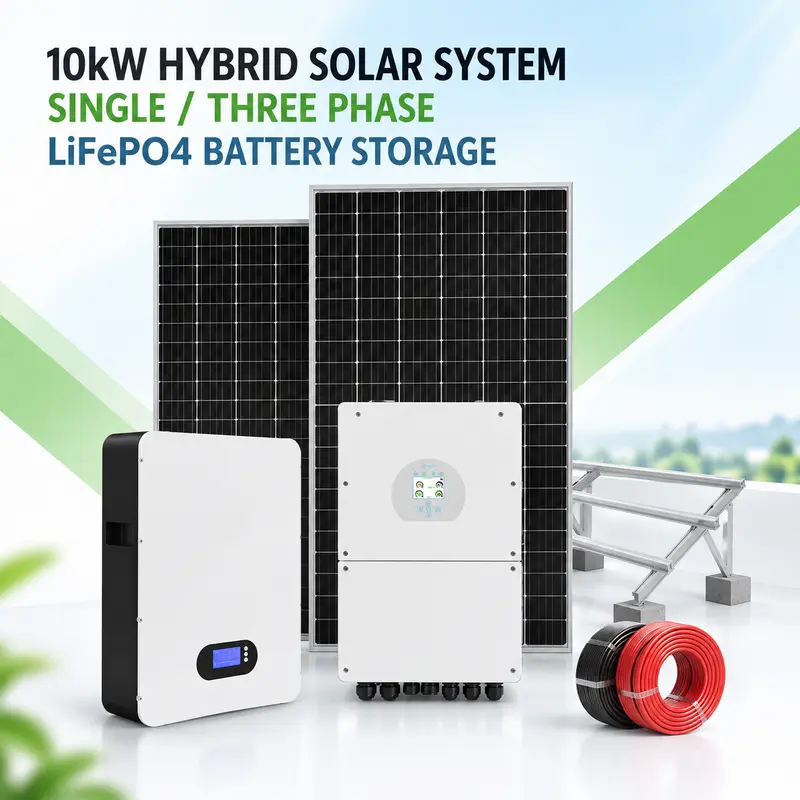
The 10kW hybrid solar system is a configurable solar generation and battery storage solution for homes, villas, farms, offices and small commercial facilities. It integrates solar panels, a hybrid inverter and a LiFePO4 battery to improve solar self-consumption and provide backup power during grid interruptions.
Single-phase and three-phase configurations are available. The correct inverter model, AC output voltage, solar array capacity and battery storage are selected according to the destination market, electrical system, load characteristics and required backup time.
Key Features
- 10kW rated inverter output: Suitable for medium residential and selected small commercial loads.
- Single-phase or three-phase options: Configured according to the customer’s local electrical standard.
- LiFePO4 battery storage: Battery capacity can be customized for different backup requirements.
- MPPT solar charging: The hybrid inverter manages solar generation and battery charging.
- Multiple energy sources: Solar, battery and utility power can be coordinated according to the selected inverter and operating mode.
- Backup power: Essential loads can continue operating during a grid interruption when the system is correctly configured.
- Monitoring option: WiFi, app or web-based monitoring may be available with the selected inverter.
- Complete system supply: Solar panels, battery, inverter, mounting structures, cables and protection devices can be included.
How the Hybrid Solar System Works
During daylight hours, the solar panels generate DC electricity. The hybrid inverter converts the solar energy into AC power for the connected loads. Surplus solar energy can be stored in the LiFePO4 battery or managed according to the selected operating mode.
When solar generation is lower than the load demand, the battery or utility grid can provide additional power. During a grid outage, the inverter can supply selected backup loads from the battery, subject to inverter output capacity, battery discharge power and system design.
Whether the system can export electricity to the utility grid depends on the selected inverter, local grid regulations and installation approval. These requirements must be confirmed before selecting the final equipment.
Single-Phase and Three-Phase Options
The single-phase configuration is generally suitable for homes and buildings with a 220–240V single-phase electrical supply. The three-phase configuration is intended for properties using a 380–415V three-phase supply.
The two versions use different inverter models and cannot be selected only by looking at total load power. Customers should confirm their grid voltage, phase type, frequency and distribution system before ordering.
System Components
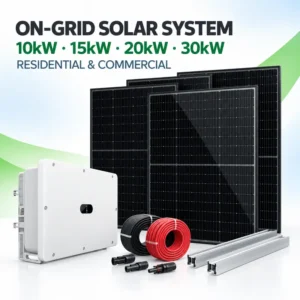
- Monocrystalline solar panels
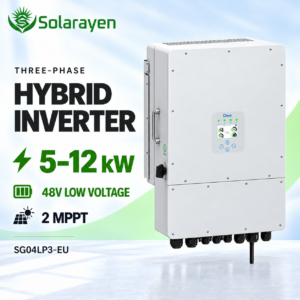
- 10kW single-phase or three-phase hybrid inverter
- LiFePO4 battery modules with integrated BMS
- Roof-mounted or ground-mounted solar structure
- PV cable and solar connectors
- Battery power and communication cables
- DC and AC protection devices
- Optional combiner box and distribution box
- Optional WiFi or remote monitoring device
Technical Specifications
| System Option | 10kW Single Phase | 10kW Three Phase |
|---|---|---|
| System Information | ||
| Rated System Power | 10kW | 10kW |
| System Type | Hybrid Solar Power System with Battery Storage | |
| Application | Residential and Small Commercial Energy Storage | |
| Configuration Method | Customized According to Load and Energy Requirements | |
| AC Output Configuration | ||
| Phase Type | Single Phase | Three Phase |
| Typical AC Voltage | 220 / 230 / 240V | 380 / 400 / 415V |
| Output Frequency | 50Hz / 60Hz | 50Hz / 60Hz |
| Rated Inverter Output | 10kW | 10kW |
| Grid Connection | Subject to Selected Inverter and Local Grid Requirements | |
| Backup Output | Available with Compatible Hybrid Inverter Configuration | |
| Solar Array Configuration | ||
| Solar Panel Type | Monocrystalline PV Module | |
| Solar Array Capacity | Customized According to Energy Consumption and Local Solar Conditions | |
| Solar Controller | Integrated MPPT | |
| Solar Panel Quantity | Calculated According to Panel Wattage and Required PV Capacity | |
| Mounting Type | Roof-Mounted or Ground-Mounted | |
| Battery Configuration | ||
| Battery Chemistry | LiFePO4 | |
| Battery Capacity | Customized According to Daily Consumption and Backup Time | |
| Battery Voltage | Matched to the Selected Hybrid Inverter | |
| Battery Management System | Integrated BMS | |
| BMS Communication | CAN or RS485, Subject to Battery and Inverter Compatibility | |
| Battery Installation | Wall-Mounted, Rack-Mounted or Floor-Standing Option | |
| Battery Cycle Life | Confirmed According to the Selected Battery Model and Test Conditions | |
| Monitoring and Operating Modes | ||
| System Monitoring | WiFi / App / Web Monitoring, Model Dependent | |
| Solar Self-Consumption | Supported | |
| Battery Backup | Supported with Correct System Configuration | |
| Time-of-Use Operation | Available with Selected Inverter Models | |
| Generator Input | Model Dependent | |
| Cables and Accessories | ||
| PV Cable | 4 mm² / 6 mm² or Project-Specific Selection | |
| Solar Connectors | MC4-Compatible Connectors | |
| Battery Cable | Selected According to Battery Current and Installation Distance | |
| Solar Mounting Structure | Optional Roof or Ground Mounting Kit | |
| AC/DC Protection | Configured According to System Design | |
| Combiner Box | Optional, Depending on PV String Design | |
| Ordering Information | ||
| System Customization | PV Capacity, Battery Capacity, Inverter and Accessories | |
| OEM Service | Battery Branding and Packaging Available | |
| Certification | Confirmed Separately for Each Selected Component | |
| Warranty | Confirmed According to the Selected Inverter, Battery and Solar Panel | |
| Final Bill of Materials | Issued After Project Requirements Are Confirmed | |
How to Configure the Correct 10kW System
A 10kW inverter does not automatically determine the required solar panel capacity or battery capacity. The following information is needed before preparing the final system configuration:
- Installation country and local grid standard
- Single-phase or three-phase electrical supply
- AC output voltage and frequency
- Maximum simultaneous load
- Daily electricity consumption in kWh
- Essential loads requiring backup
- Required battery backup time
- Available roof or ground installation area
- Whether generator input is required
Air conditioners, pumps, refrigerators, compressors and other motor loads may have high starting currents. Their rated and starting power should be considered when selecting the inverter and battery discharge capability.
Recommended Applications
- Residential solar self-consumption systems
- Home battery backup systems
- Villas and large houses
- Farms and rural properties
- Small offices and retail stores
- Workshops and light commercial facilities
- Locations with unstable utility power
Customization and Quotation
This product is offered as a customized 10kW system rather than a fixed package. The solar panel brand and wattage, inverter model, battery capacity, mounting structure and electrical accessories can be selected according to the project.
For an accurate quotation, please provide the installation country, phase type, load list, daily electricity consumption and required backup duration. We will prepare a recommended configuration and detailed bill of materials for confirmation.
FAQ
What is included in the 10kW hybrid solar system?
The system can include solar panels, a hybrid inverter, LiFePO4 batteries, mounting structures, cables, connectors and AC/DC protection devices. The final scope is confirmed in the quotation.
Should I choose single phase or three phase?
The phase type must match the building’s electrical supply. Single-phase systems are commonly used with 220–240V supplies, while three-phase systems generally use 380–415V.
How much battery capacity do I need?
Battery capacity depends on nighttime consumption, essential loads and required backup hours. Daily energy consumption in kWh is needed for accurate calculation.
How many solar panels are required?
The quantity depends on panel wattage, local sunlight, inverter PV input limits and the required daily solar generation.
Can the system operate during a power outage?
Yes, when a compatible hybrid inverter and backup circuit are used. The available backup power is limited by the inverter output and battery discharge capability.
Can the system feed electricity into the utility grid?
Grid export depends on the selected inverter and local utility approval. These requirements must be confirmed before equipment selection.
Can I connect a generator?
Generator input is available with selected hybrid inverter models. Generator capacity, voltage and frequency must be checked before connection.
Can the battery capacity be expanded later?
Expansion may be possible when compatible battery modules, BMS communication and inverter battery limits are considered during the original system design.
Does the complete system have one certificate and warranty?
No. Solar panels, inverters, batteries and protection devices have their own certifications and warranty conditions. These are confirmed separately in the final bill of materials.