24V / 36V / 48V Forklift Lead-Acid to Lithium Conversion – 230Ah to 690Ah

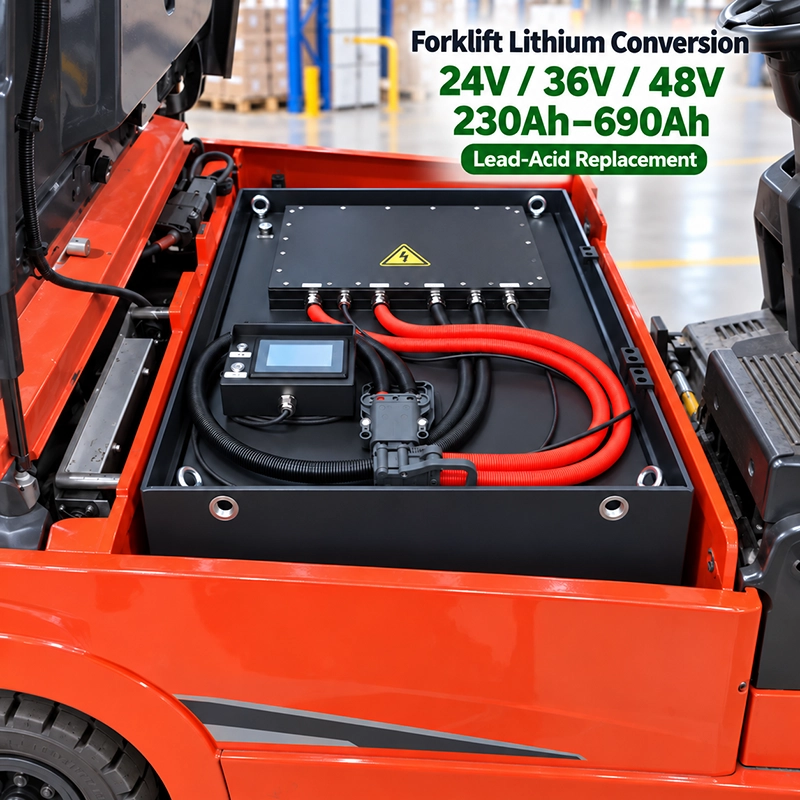
This customized forklift lead-acid to lithium conversion solution covers 24V, 36V and 48V traction battery systems, with recommended LiFePO4 configurations from 25.6V to 51.2V and 230Ah to 690Ah.

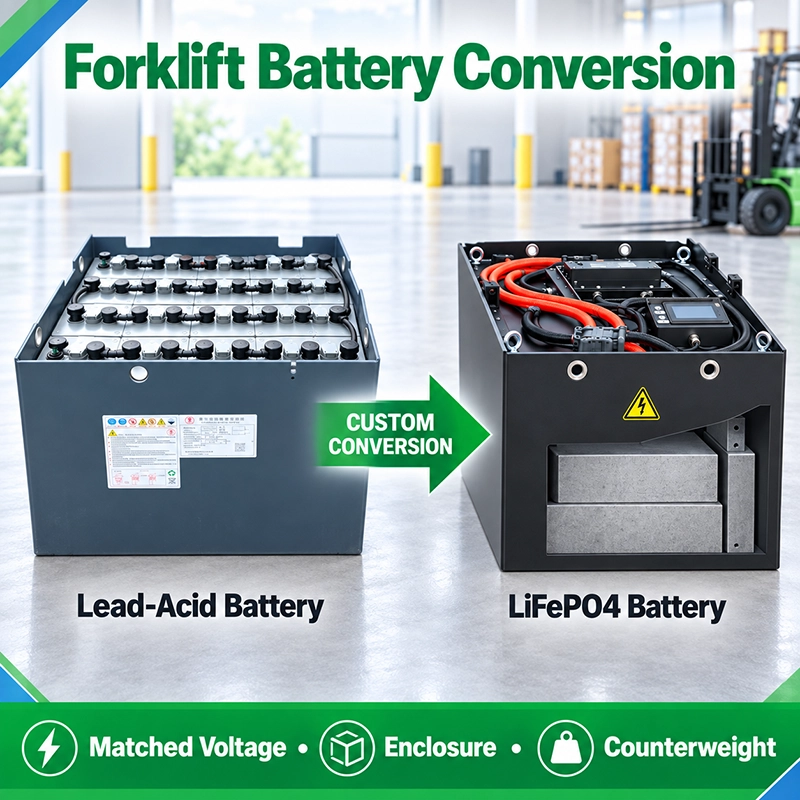
Replacing a lead-acid forklift battery is not a simple one-to-one battery exchange. The original lead-acid battery is large and heavy, and its weight may form an essential part of the forklift counterbalance. A LiFePO4 battery is normally smaller and lighter, so the replacement solution must consider battery compartment dimensions, total battery weight, vehicle balance, connector, charger and operating current.

Based on the original battery specifications provided by the customer, we design the LiFePO4 battery pack, steel enclosure and required counterweight as one matched system. A compatible charger, industrial connector, intelligent BMS and optional CAN or RS485 communication can also be supplied.

New products

Custom Forklift Lead-Acid to Lithium Conversion

Our forklift lead-acid to lithium conversion solution is designed for electric forklifts, pallet trucks, stackers, reach trucks, tow tractors and other industrial vehicles originally powered by lead-acid traction batteries.

This solution covers common 24V, 36V and 48V forklift electrical systems. Recommended LiFePO4 configurations include 25.6V, 38.4V and 51.2V battery packs with capacities ranging from 230Ah to 690Ah.

Each conversion project is designed according to the original lead-acid battery specifications and the actual forklift operating requirements. Final voltage, capacity, dimensions, weight, connector, charger and communication configuration must be confirmed before production.

Why Forklift Lithium Conversion Requires Custom Engineering

A forklift lead-acid battery is not only an energy source. Its large size and heavy weight may also form an important part of the forklift counterbalance system.

After replacing lead-acid cells with LiFePO4 cells, the battery pack normally becomes smaller and considerably lighter. Installing a lighter battery without evaluating the total weight may affect forklift balance, stability and rated lifting performance.

For this reason, forklift lithium conversion cannot be based only on voltage and ampere-hour capacity. The original battery compartment, total battery weight, forklift load rating, center of gravity and operating conditions must also be evaluated.

Battery and Counterweight Design

Based on the specifications provided by the customer, we recommend a suitable LiFePO4 battery configuration and calculate whether additional counterweight is required.

When counterweight is necessary, the steel battery enclosure can be designed to accommodate both the lithium battery modules and the required weight. This helps the complete replacement assembly match the forklift battery compartment and approach the required total battery weight.

Some smaller 24V industrial vehicles may not require additional counterweight. However, the final requirement must always be determined according to the original battery weight, vehicle structure and forklift manufacturer requirements.

Recommended Lithium Battery Configurations

  • 24V lead-acid systems: 25.6V LiFePO4, including 230Ah, 314Ah and 460Ah options
  • 36V lead-acid systems: 38.4V LiFePO4, including 690Ah configuration
  • 48V lead-acid systems: 51.2V LiFePO4, including 460Ah, 630Ah and 690Ah options

The lithium battery capacity does not always need to be exactly the same as the original lead-acid battery capacity. The recommended capacity is determined according to working hours, discharge current, charging schedule, usable energy requirements and available battery compartment space.

Intelligent Battery Management System

Each battery pack can be equipped with an intelligent BMS that monitors cell voltage, pack current and operating temperature. Protection functions can include overcharge, over-discharge, overcurrent, short circuit and abnormal temperature protection.

A monitoring display can be installed to show battery operating information. CAN or RS485 communication can also be configured when communication with the forklift, charger or external monitoring system is required.

Matching Charger and Industrial Connector

The original lead-acid charger is generally not suitable for charging a LiFePO4 battery unless its charging voltage and charging profile have been technically verified.

We can provide a matched lithium battery charger according to the selected battery voltage, capacity and required charging time. Charger current, output voltage, plug type and communication function must be confirmed before ordering.

Industrial battery connectors, high-current cables, charging ports and cable outlet positions can be customized according to the original forklift connection system.

Information Required for a Conversion Solution

To prepare an accurate replacement proposal, please provide:

  • Forklift brand and model
  • Rated lifting capacity
  • Original lead-acid battery voltage and capacity
  • Original battery length, width and height
  • Original battery total weight
  • Battery compartment photos and dimensions
  • Battery connector photos and current rating
  • Forklift nameplate photo
  • Daily operating hours and number of shifts
  • Required charging time
  • Required quantity

Customized Manufacturing and OEM Supply

Solarayen supplies customized forklift LiFePO4 batteries for forklift dealers, battery distributors, importers, fleet operators and industrial equipment manufacturers.

Available customization options include battery voltage and capacity, enclosure dimensions, integrated counterweight, industrial connector, cable position, monitoring display, charger, communication protocol, OEM logo and packaging.

All conversion specifications must be confirmed through a final technical agreement. The forklift manufacturer’s requirements regarding minimum battery weight, battery compartment dimensions and vehicle balance should also be checked before installation.

Request a Customized Conversion Proposal

Send us the original lead-acid battery nameplate, dimensions, weight, connector photos and forklift model. Our technical team will recommend a suitable LiFePO4 battery capacity, enclosure, counterweight and charger configuration for your application.

Leave a Message

Tell us what product you need and include the voltage, capacity, quantity or application if available. We will contact you as soon as possible.

Contact Form Demo

Custom Forklift Lead-Acid to Lithium Conversion

Our forklift lead-acid to lithium conversion solution is designed for electric forklifts, pallet trucks, stackers, reach trucks, tow tractors and other industrial vehicles originally powered by lead-acid traction batteries.

This solution covers common 24V, 36V and 48V forklift electrical systems. Recommended LiFePO4 configurations include 25.6V, 38.4V and 51.2V battery packs with capacities ranging from 230Ah to 690Ah.

Each conversion project is designed according to the original lead-acid battery specifications and the actual forklift operating requirements. Final voltage, capacity, dimensions, weight, connector, charger and communication configuration must be confirmed before production.

Why Forklift Lithium Conversion Requires Custom Engineering

A forklift lead-acid battery is not only an energy source. Its large size and heavy weight may also form an important part of the forklift counterbalance system.

After replacing lead-acid cells with LiFePO4 cells, the battery pack normally becomes smaller and considerably lighter. Installing a lighter battery without evaluating the total weight may affect forklift balance, stability and rated lifting performance.

For this reason, forklift lithium conversion cannot be based only on voltage and ampere-hour capacity. The original battery compartment, total battery weight, forklift load rating, center of gravity and operating conditions must also be evaluated.

Battery and Counterweight Design

Based on the specifications provided by the customer, we recommend a suitable LiFePO4 battery configuration and calculate whether additional counterweight is required.

When counterweight is necessary, the steel battery enclosure can be designed to accommodate both the lithium battery modules and the required weight. This helps the complete replacement assembly match the forklift battery compartment and approach the required total battery weight.

Some smaller 24V industrial vehicles may not require additional counterweight. However, the final requirement must always be determined according to the original battery weight, vehicle structure and forklift manufacturer requirements.

Recommended Lithium Battery Configurations

  • 24V lead-acid systems: 25.6V LiFePO4, including 230Ah, 314Ah and 460Ah options
  • 36V lead-acid systems: 38.4V LiFePO4, including 690Ah configuration
  • 48V lead-acid systems: 51.2V LiFePO4, including 460Ah, 630Ah and 690Ah options

The lithium battery capacity does not always need to be exactly the same as the original lead-acid battery capacity. The recommended capacity is determined according to working hours, discharge current, charging schedule, usable energy requirements and available battery compartment space.

Intelligent Battery Management System

Each battery pack can be equipped with an intelligent BMS that monitors cell voltage, pack current and operating temperature. Protection functions can include overcharge, over-discharge, overcurrent, short circuit and abnormal temperature protection.

A monitoring display can be installed to show battery operating information. CAN or RS485 communication can also be configured when communication with the forklift, charger or external monitoring system is required.

Matching Charger and Industrial Connector

The original lead-acid charger is generally not suitable for charging a LiFePO4 battery unless its charging voltage and charging profile have been technically verified.

We can provide a matched lithium battery charger according to the selected battery voltage, capacity and required charging time. Charger current, output voltage, plug type and communication function must be confirmed before ordering.

Industrial battery connectors, high-current cables, charging ports and cable outlet positions can be customized according to the original forklift connection system.

Information Required for a Conversion Solution

To prepare an accurate replacement proposal, please provide:

  • Forklift brand and model
  • Rated lifting capacity
  • Original lead-acid battery voltage and capacity
  • Original battery length, width and height
  • Original battery total weight
  • Battery compartment photos and dimensions
  • Battery connector photos and current rating
  • Forklift nameplate photo
  • Daily operating hours and number of shifts
  • Required charging time
  • Required quantity

Customized Manufacturing and OEM Supply

Solarayen supplies customized forklift LiFePO4 batteries for forklift dealers, battery distributors, importers, fleet operators and industrial equipment manufacturers.

Available customization options include battery voltage and capacity, enclosure dimensions, integrated counterweight, industrial connector, cable position, monitoring display, charger, communication protocol, OEM logo and packaging.

All conversion specifications must be confirmed through a final technical agreement. The forklift manufacturer’s requirements regarding minimum battery weight, battery compartment dimensions and vehicle balance should also be checked before installation.

Request a Customized Conversion Proposal

Send us the original lead-acid battery nameplate, dimensions, weight, connector photos and forklift model. Our technical team will recommend a suitable LiFePO4 battery capacity, enclosure, counterweight and charger configuration for your application.
Leave a Message

Tell us what product you need and include the voltage, capacity, quantity or application if available. We will contact you as soon as possible.

Contact Form Demo