


LiFePO4 home storage batteries help households that have installed rooftop solar panels store surplus solar power generated during the day for evening use. Wall-Mounted LiFePO4 Batteries, Floor-Standing LiFePO4 Batteries and Rack-Mounted LiFePO4 Batteries are the three common types of LiFePO4 home storage batteries available on the market. Many homeowners only compare battery capacity and price, without understanding how each battery type behaves in day-to-day operation. What practical differences will users notice after installation? This technical article explains their actual working characteristics for reference.
What kind of daily load fits wall-mounted LiFePO4 home storage batteries?
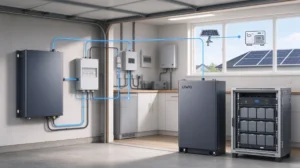
Wall-mounted LiFePO4 batteries are fully integrated units designed for regular household power consumption. They are made to cover common evening loads, such as lights, televisions, refrigerators and small kitchen appliances.
The power output of Wall-Mounted LiFePO4 Batteries is set for steady, medium and low power demand. It works best when family power use stays relatively stable day after day. If multiple high-power appliances start at the same time, the battery will limit output automatically to protect internal cells.
This type is a good match for families without frequent heavy power consumption. It can absorb extra solar energy produced by small and medium PV systems and reduce electricity bought from the grid every day.
When should homeowners pick floor-standing LiFePO4 batteries?
Some families have more high-power equipment running at home, including air conditioners, electric water heaters and vehicle chargers. These devices need higher sustained power. This is where floor-standing battery systems show their strengths.
Floor-Standing LiFePO4 Batteries adopt tower packaging with larger battery stacks. They can maintain high continuous output for longer periods. When solar generation is strong at noon, they can store more excess energy and release it later to support heavy loads.
The downside is the need for dedicated floor space. Users need to reserve a solid area in utility rooms or basements. It is suitable for homes with large PV arrays and frequent high-power electricity use.
What makes rack-mounted LiFePO4 batteries different in daily use?
Unlike integrated battery packs, Rack-Mounted LiFePO4 Batteries are built from separate modules. Homeowners can start with a small number of modules and add more later when their power demand rises.
Every module works independently with its own BMS. If one module fails, only that single module needs replacement instead of the whole storage system. This design brings convenience for long-term maintenance.
The installation process is more complicated. Workers need to fix the rack, wire each module and finish parameter setting on site. It is more suitable for users who want flexible capacity and plan to adjust their storage size in the future.
How do these three batteries handle temperature changes at home?
Indoor or garage temperature changes affect battery charging and discharging. All LiFePO4 batteries have a proper working temperature range.
Wall-mounted units mainly rely on natural air flow for cooling. If placed in a hot garage without shade, the battery will slow down charging speed to protect cells. In cold conditions, charging power will also drop automatically.
Floor-standing models usually have built-in fans to manage heat. The vertical layout helps hot air flow upward, keeping cell temperature more balanced. It performs better in rooms with obvious temperature swings.
Rack-mounted systems use cabinet airflow to cool all modules evenly. Users need to leave enough gaps around the rack for ventilation, otherwise heat will accumulate and speed up battery aging.
What maintenance tasks should users expect for each battery type?
Regular simple checks help keep home storage batteries running well, but maintenance requirements vary for different structures.
For Wall-Mounted LiFePO4 Batteries, daily inspection is simple. Users only need to check the indicator lights and ensure no blockage around air vents. Since it is an all-in-one pack, internal faults usually require whole-pack replacement.
Floor-Standing LiFePO4 Batteries have an easily opened cabinet. Technicians can inspect internal components conveniently during routine service. Still, most tower products cannot replace individual battery modules.
Rack-Mounted LiFePO4 Batteries allow module pulling and replacement. Routine checks include checking module status and communication signals. Professional technicians are required for any module change or system adjustment.
Conclusion
When choosing LiFePO4 home storage batteries for rooftop solar, homeowners should look at their daily power loads, available space and maintenance preferences. Wall-Mounted LiFePO4 Batteries, Floor-Standing LiFePO4 Batteries and Rack-Mounted LiFePO4 Batteries serve different daily usage needs. Picking the right type based on real household power habits helps make better use of solar power and cut daily electricity bills.