


Residential Energy Storage Batteries are becoming an important solution for modern homes as renewable energy adoption continues to grow. More households are looking for reliable ways to store solar power and reduce dependence on the traditional electricity grid. Solar energy generation is naturally affected by weather conditions and daylight availability, making energy storage an important part of modern home energy systems.
These battery systems allow homeowners to store excess electricity generated during the day and use it when energy demand increases, such as during the evening, nighttime, or unexpected power interruptions. With different installation designs available, including wall-mounted, rack-mounted, and floor-standing systems, users can choose a suitable solution based on their space conditions, energy requirements, and installation environment.
Why Are Residential Energy Storage Batteries Becoming Important for Modern Homes?
The increasing use of solar power has changed the way households manage electricity. Instead of consuming solar energy immediately after it is produced, energy storage systems allow electricity to be saved for later use.
A residential energy storage system usually includes battery modules, a battery management system (BMS), an inverter, and monitoring components. These parts work together to store, manage, and deliver electricity efficiently.
The main benefits of residential energy storage batteries include:
| Application | How Energy Storage Helps |
|---|---|
| Solar energy storage | Stores unused solar power for later consumption |
| Backup power | Provides electricity during grid interruptions |
| Energy management | Helps households control electricity usage |
| Renewable energy utilization | Improves the efficiency of solar power systems |
For households with solar installations, energy storage can help maximize the value of generated electricity by reducing energy waste.
How Do LiFePO4 Batteries Support Safer Residential Energy Storage?
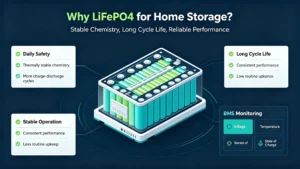
Lithium iron phosphate (LiFePO4) battery technology has become widely used in residential energy storage systems due to its stable chemical structure and long service life.
Compared with traditional battery technologies, LiFePO4 batteries are designed to provide:
- Higher safety performance during daily operation
- Longer cycle life for repeated charging and discharging
- Stable performance under different operating conditions
- Lower maintenance requirements
The battery management system continuously monitors important parameters such as voltage, temperature, and charging status to help maintain reliable operation.
For residential applications, these characteristics make LiFePO4 batteries suitable for long-term energy storage where safety and durability are important considerations.
What Are Wall-Mounted LiFePO4 Batteries and When Are They Suitable?
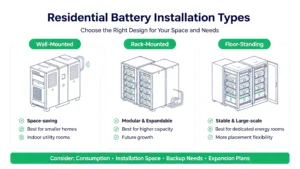
Wall-Mounted LiFePO4 Batteries are designed to save floor space by installing the battery system vertically on a wall. This structure is commonly considered for homes where available installation space is limited.
The compact design makes wall-mounted systems suitable for:
- Apartments or smaller houses
- Indoor energy storage rooms with limited space
- Residential solar systems requiring a clean installation layout
Because the battery is mounted on the wall, installation planning should consider wall strength, ventilation conditions, cable arrangement, and maintenance accessibility.
What Should Users Consider Before Installing Wall-Mounted Batteries?
Before choosing a wall-mounted energy storage system, homeowners usually need to evaluate:
- Available installation area
The wall should provide enough space and support for the battery system. - Energy requirements
Battery capacity should match household electricity consumption and solar generation. - Environmental conditions
Temperature, humidity, and ventilation can affect battery performance.
How Do Rack-Mounted LiFePO4 Batteries Provide Flexible Energy Storage Solutions?
Rack-Mounted LiFePO4 Batteries use a modular installation structure where multiple battery units can be arranged together. This design is often used when users require higher capacity or future expansion options.
Rack-mounted systems are commonly applied in:
- Larger residential properties
- Homes with higher electricity consumption
- Solar systems requiring scalable storage capacity
The modular structure allows users to add additional battery modules according to future energy needs.
| Battery Installation Type | Main Feature | Suitable Scenario |
|---|---|---|
| Wall-mounted | Space-saving installation | Small residential applications |
| Rack-mounted | Modular expansion capability | Higher capacity requirements |
| Floor-standing | Stable ground installation | Larger home energy systems |
Why Are Floor-Standing LiFePO4 Batteries Used in Larger Residential Energy Systems?
Floor-Standing LiFePO4 Batteries are installed directly on the ground and usually provide a stable structure for larger-capacity energy storage applications.
This installation method can be suitable for:
- Independent houses with dedicated energy rooms
- Homes requiring larger storage capacity
- Solar systems with higher backup power requirements
Compared with wall-mounted designs, floor-standing systems usually provide more flexibility in physical placement because they do not require wall installation conditions.
However, users should still consider installation space, cable management, ventilation, and protection from unsuitable environmental conditions.
How Can Homeowners Choose Between Different Residential Energy Storage Battery Designs?
Choosing the right Residential Energy Storage Batteries depends on several factors rather than only battery capacity, including electricity usage, installation space, and future expansion needs.
Important considerations include:
Household Electricity Consumption
Users should understand daily electricity usage patterns, including:
- Average daily energy consumption
- Peak electricity demand
- Backup power requirements
Available Installation Space
Different battery structures require different installation environments:
- Limited indoor space may favor wall-mounted designs.
- Larger energy storage rooms may support rack-mounted or floor-standing systems.
Future Expansion Requirements
Families expecting higher electricity demand in the future may prefer modular systems that allow additional battery capacity.
What Are the 5 Factors That Influence Residential Energy Storage Battery Performance?
Proper operation, installation, and system management can significantly affect the lifespan and reliability of residential energy storage batteries. Understanding these factors helps users maintain stable performance and improve the overall efficiency of their solar energy storage systems.
Key factors include:
- Correct charging and discharging management
Proper charging and discharging strategies help reduce unnecessary battery stress and support longer service life. - Suitable installation temperature
Maintaining an appropriate operating temperature range helps ensure stable battery performance and reduces the impact of extreme environmental conditions. - Regular system monitoring
Monitoring battery status, energy usage, and system performance allows users to identify potential issues and maintain reliable operation. - Proper protection settings
Battery protection functions, including over-voltage, over-current, and temperature protection, help improve system safety and reliability. - Battery system compatibility
The compatibility between batteries, inverters, and energy management systems can influence overall energy efficiency and long-term system performance.
Although modern battery technologies require less maintenance than traditional energy storage solutions, regular monitoring and proper system management remain important for achieving reliable residential energy storage performance.
How Will Residential Energy Storage Develop with Solar Power Growth?
As renewable energy becomes more common, Residential Energy Storage Batteries are expected to play a larger role in household electricity management and solar energy utilization.
With the development of solar energy systems, residential storage technology is expected to improve in several areas:
- Higher energy efficiency
- More intelligent energy management
- Better integration with solar systems
- More flexible installation options
Different battery structures, including wall-mounted, rack-mounted, and floor-standing designs, will continue to meet different household energy needs.
Understanding the differences between these systems helps homeowners make better decisions when planning a reliable and efficient residential energy storage solution.